
Which is Better: Human-Centered Design or Lean?
Understand how each approach drives innovation and efficiency

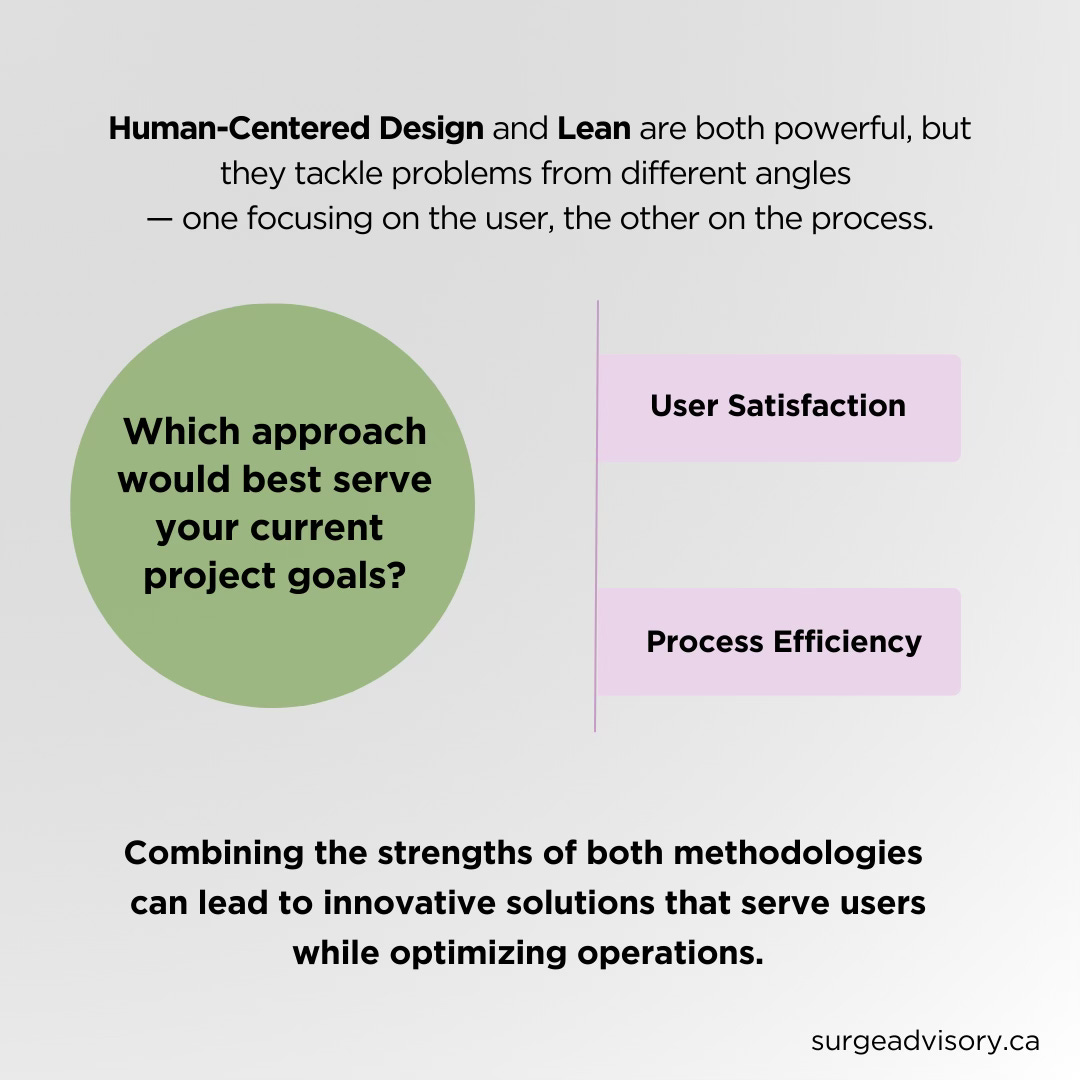
When it comes to delivering better outcomes, two methodologies often stand out: Human-Centered Design (HCD) and Lean.
Both have gained popularity for their focus on creating value, yet they do so in very different ways.
In this article, we’ll take a high-level look at the similarities and differences between HCD and Lean, helping you understand when and how to apply each.
What is Human-Centered Design (HCD)?
Human-Centered Design (HCD) focuses on solving problems by deeply understanding the people experiencing them. The goal is to create solutions that meet the needs, emotions, and experiences of users. Empathy is central to this approach, which means that every design decision is made with the user in mind. The process involves researching users' needs, generating ideas, prototyping, and testing, all while iterating based on user feedback.
What is Lean?
Lean, on the other hand, is a methodology rooted in maximizing value by eliminating waste and improving efficiency. Originally developed in manufacturing, Lean has since been applied to a wide range of industries. It focuses on streamlining processes, reducing unnecessary steps, and delivering more with fewer resources. Lean is centered on continuous improvement and creating value by cutting out inefficiencies in workflows.
While both methodologies aim to improve outcomes, the path they take is quite different.
Let’s break down their core principles and how they compare.
Primary Focus: User Needs vs. Efficiency
The primary focus of Human-Centered Design is understanding user needs and creating solutions that enhance their experience. It’s about designing products or services that are intuitive, user-friendly, and meet the emotional and practical needs of the people using them.
In contrast, Lean focuses on process efficiency and waste reduction. The main goal is to streamline operations to create value by cutting out unnecessary steps, delays, or resources.
Both methodologies are focused on delivering better outcomes, whether for the user (HCD) or the process (Lean). Ultimately, they both create value for end-users or customers.
While HCD is user-experience-centric, Lean is more focused on process efficiency and minimizing waste.
User-Centeredness: A Core Principle in HCD
At the heart of Human-Centered Design is a deep understanding of the user's emotions, needs, and challenges. Every solution is built around the user experience, ensuring that the final product or service is useful, usable, and desirable.
Lean values the people involved in the process—those doing the work as well as the customers. However, its user-centeredness is more about respecting workers and ensuring that processes support their roles.
Both approaches consider the end user, whether it's the customer or the team executing the process.
HCD’s user-centeredness runs deeper, focusing entirely on the user experience. Lean is process-centered and considers people’s roles within the process rather than emphasizing their emotions or needs.
Value: How It’s Defined
In HCD, value is defined by user satisfaction. A successful outcome is one that meets or exceeds the user's expectations, leaving them with a positive emotional experience.
In Lean, value is defined by efficiency—creating more with fewer resources and eliminating waste to streamline operations.
Both methodologies aim to create value but define it in different ways.
HCD’s value is user-centric, focused on emotional and practical satisfaction. Lean’s value is more process-centric, aimed at operational efficiency.
Contextual Understanding: Environment vs. Workflow
Human-Centered Design takes into account the user's environment, culture, and how the product or service will fit into their daily lives. Solutions are tailored to work within the user’s specific context.
Lean focuses on how processes fit within the workflow. The focus is on ensuring that each step in a process flows smoothly and adds value without unnecessary delays or complexity.
Both methodologies consider context, though they approach it differently.
HCD focuses on the user’s environment and experience, while Lean focuses on the efficiency and effectiveness of the process flow.
Collaboration: Stakeholders and Teams
Collaboration is key in HCD, often involving diverse teams, stakeholders, and most importantly, the users themselves. By working directly with users, designers can ensure that the solutions truly meet their needs.
Lean also values collaboration, particularly within internal teams. It encourages problem-solving through teamwork, but the collaboration primarily happens within the organization rather than with end users.
Both methodologies value collaboration and teamwork to improve outcomes.
HCD directly involves users in the design process, while Lean focuses on collaboration within the internal team for process improvement.
Iteration: Refinement through Feedback
Iteration is a central component of Human-Centered Design. Solutions are continually refined based on user feedback, with prototypes and designs evolving as designers learn more about what users need.
In Lean, iteration comes in the form of Kaizen, or continuous improvement. Lean teams constantly refine their processes to eliminate waste and increase efficiency.
Both approaches embrace ongoing improvement cycles.
HCD’s iteration relies heavily on user feedback, while Lean’s improvement cycles are focused on refining processes and eliminating waste.
Choosing the Right Approach
So how do you choose between Human-Centered Design and Lean?
It depends on your focus.
If your priority is to enhance user experience and deeply understand the needs of your users, Human-Centered Design may be the best fit. However, if your goal is to optimize operations, reduce waste, and improve process efficiency, Lean might be more appropriate.
In many cases, the two methodologies can complement each other.
For example, you might use Human-Centered Design to develop a product that meets user needs, and then apply Lean to streamline the production process. Understanding both approaches can give you the flexibility to tackle different challenges effectively.
Both Human-Centered Design and Lean are powerful methodologies, each with its own strengths. HCD is all about empathy, user experience, and contextual design, while Lean emphasizes efficiency, process improvement, and waste reduction.
By understanding their similarities and differences, you can choose the best approach for your project or even blend the two to create a solution that delivers both user satisfaction and operational excellence.